
Branded Pattern Design For Custom Polos And Quarter-Zips
A branded apparel pattern can turn a logo, icon, product shape, local reference, or visual theme into something people discover across the garment. The goal is not to repeat a logo as many times as possible. The goal is to create a pattern that feels wearable, intentional, and unmistakably connected to the brand.
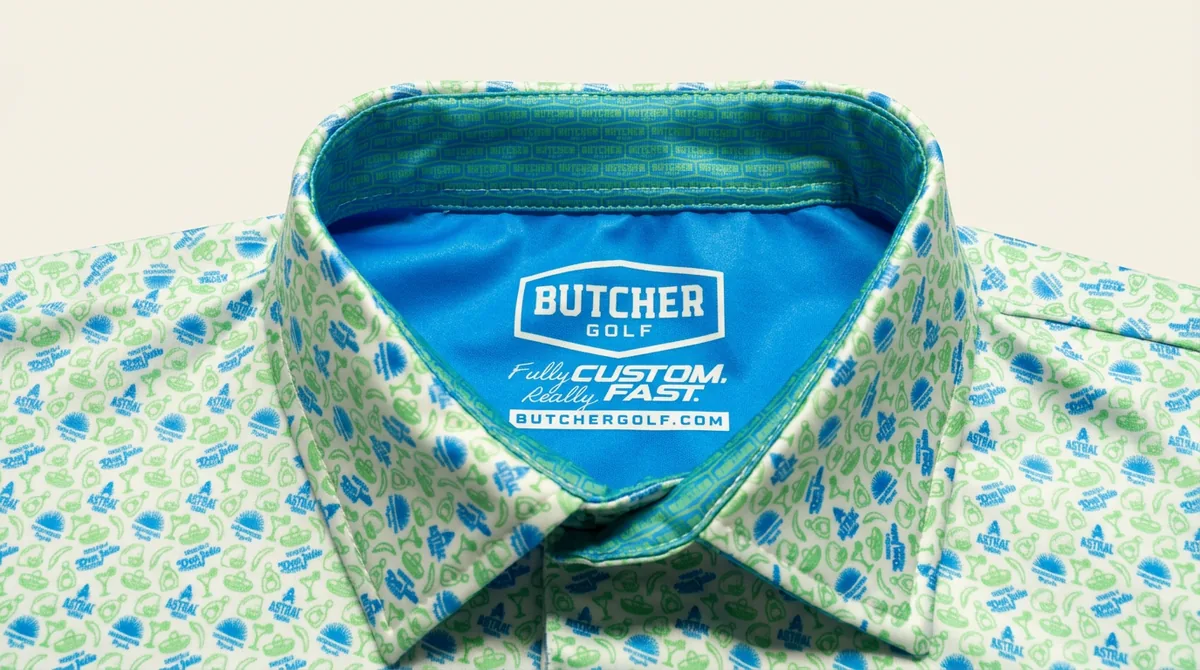
Brand-Specific
Built from your visual identity
Subtle To Bold
Pattern scale and contrast are adjustable
Panel-Aware
Designed for the actual garment construction
Fully Custom
Not selected from a stock pattern library
What A Branded Apparel Pattern Is
A branded pattern is a repeat or arranged graphic system created from elements associated with a company or organization. The source may be the primary logo, a secondary icon, initials, a product silhouette, a mascot, a symbol from the company's history, or a graphic idea connected to the event or audience.
When it is designed well, the pattern does more than fill space. It creates visual texture, supports the color palette, and rewards a closer look. From across a room, a subtle repeat may simply make the polo feel more considered. Up close, the viewer recognizes the logo mark or branded detail inside it.
That balance is especially useful for corporate apparel. The garment can feel professional enough for employees and clients while carrying more personality than a solid stock polo with a single logo.
The Main Pattern Directions
Butcher Golf can build several kinds of pattern systems. The right direction depends on the geometry of the logo, the tone of the brand, and where the apparel will be worn.
Squared logo repeat
The logo is locked into an even grid, aligned in straight rows and columns at a single size. It reads as orderly and dependable, and it works best for marks with clear proportions that stay legible at a small scale.
Offset logo repeat
The same mark is staggered so each row shifts against the one above it, like brickwork. The result feels less rigid than a squared grid while staying controlled, and it moves the eye across the body of the polo.
Dancing logo repeat
The logo rotates and flips across the pattern instead of sitting on one axis. Angles and orientations vary while spacing stays consistent, which creates energy and visual discovery without losing recognition of the mark.
Graphic pattern
The pattern is built from a visual idea rather than the logo itself — icons, objects, product references, regional cues, geometric forms, or golf elements. The brand connection comes from the subject, palette, and overall direction.
Multi-logo with graphic pattern
Logo marks, wordmarks, and supporting graphic elements are mixed into one layout at multiple scales. This is useful when the apparel should tell a story around an event, product, partnership, or campaign rather than the identity alone.
Pattern Scale Changes The Personality
The same motif can produce three completely different garments depending on its size, spacing, and contrast.
Subtle scale
Small marks placed close together often read as texture from a distance. The branded element becomes visible only at conversational range. This is a strong direction for executives, professional-services teams, client meetings, and everyday uniforms.
Medium scale
The pattern is identifiable without dominating the garment. This is the most versatile range for employee apparel, sales teams, company outings, and gifts because it communicates personality while remaining easy to wear.
Bold scale
Large motifs create immediate recognition and stronger photographic impact. Bold patterns can work well for tournaments, conferences, brand activations, hospitality events, and groups that need to stand out across a venue.
Scale should be chosen based on distance and context, not just how the artwork looks on a laptop. The wearer, the room, the event, and the camera all affect how the pattern will be experienced.
Contrast Can Turn The Volume Up Or Down
Pattern scale and color contrast work together. A medium-size logo in two closely related colors may feel quieter than a small logo in two sharply contrasting colors.
A tonal pattern uses nearby values from the brand palette so the motif sits inside the fabric rather than jumping forward. A higher-contrast treatment separates the motif clearly from the background. Both can be correct.
For professional corporate apparel, we often recommend deciding what should be noticed first:
- The wearer and overall silhouette
- The company colors
- The featured chest or sleeve logo
- The repeat pattern
- A special panel or trim detail
The design should have a hierarchy. When every element is equally loud, nothing feels important.
Our guide to custom polo color blocking explains how solid panels and trim can control a patterned design, and Pantone and brand color matching covers how those colors translate to fabric. Start by sending the right logo files.
A Pattern Must Be Designed For The Garment
A seamless pattern tile is only the beginning. It still has to be applied to actual garment panels. That is also why a pattern that only exists inside a rendered image has to be rebuilt as a real repeat — see how AI concepts become real custom polos.
The front, back, sleeves, collar, placket, cuffs, and shoulders are different shapes. A motif that looks balanced in a square swatch may crowd the placket, rotate awkwardly on a sleeve, or break at a side seam. Panel-aware design anticipates those changes.
Important decisions include:
- Where the repeat begins on each panel
- Whether the pattern continues or changes at seams
- How motifs sit near the chest logo
- Whether sleeves mirror one another or move independently
- Whether the collar is patterned, solid, or color blocked
- How the pattern behaves around a polo placket or quarter-zip opening
- Whether small marks remain recognizable after printing and sewing
The objective is not perfect wallpaper alignment across every seam. Fabric moves, stretches, and is sewn three-dimensionally. The objective is an intentional result with no obvious visual collisions or careless breaks. This is one of the advantages of cut-and-sew custom apparel, where each panel is planned before the fabric is printed.
Using Logos Without Overusing Them
A logo can be the raw material for a pattern without being the only branded element on the garment. In many designs, the repeat works best as a quiet secondary layer while one clean logo placement carries formal identification.
A common hierarchy is:
- A tonal or medium-contrast repeat across the body
- A clear primary logo at the left chest
- One supporting mark on a sleeve or back collar
- Solid or color-blocked trim to organize the palette
Another direction removes the featured chest logo because the brand is already clearly embedded in the pattern. That can feel more fashion-forward, but it is not right for every uniform or event. The intended audience should drive the choice.
Turning A Brand Into A Pattern
- 01
Identify Usable Assets
Review the primary logo, secondary marks, icons, shapes, products, symbols, and brand guidelines.
- 02
Define The Tone
Decide whether the apparel should feel understated, classic, energetic, sporty, premium, or event-driven.
- 03
Build Pattern Directions
Explore structured repeats, offset layouts, mixed arrangements, graphic motifs, or logo-and-graphic combinations.
- 04
Test Scale And Contrast
Evaluate the pattern at realistic garment size and viewing distance.
- 05
Apply It To Panels
Plan how the motif works across body, sleeves, collar, placket, cuffs, and seams.
- 06
Add Logo Hierarchy And Trim
Select featured placements and use solid areas to control the composition.
- 07
Review And Approve
Confirm the final artwork before the fabric moves into production.
The complete custom apparel design process explains what to send and how the concept review works.
Where Branded Patterns Work Best
- Employee polos that need more identity than a solid uniform
- Sales teams and account managers
- Corporate golf tournaments and sponsor groups
- Conferences, trade shows, and brand activations
- Hospitality, beverage, and event teams
- Client gifts and customer appreciation programs
- Company retreats and milestone celebrations
- Member organizations, schools, and volunteer teams
Pattern does not have to cover the whole garment. A branded motif can live on the sleeves, inside a collar, along a shoulder panel, or within a restrained body section. Strategic placement often makes the detail feel more premium because the viewer discovers it rather than receiving everything at once.
See how branded patterns are used across custom dye-sublimated polos.
Common Questions
Still deciding? Tell us about your project and we'll answer specifics for your brand.
Start Your Design- Can you create a pattern from our company logo?
- Yes. A primary logo, secondary mark, icon, monogram, or approved brand element can become a structured, offset, mixed, or tonal repeat. The exact approach depends on the shape of the artwork and the desired level of visibility.
- Does a custom pattern have to be bold?
- No. Many corporate designs use small-scale, low-contrast motifs that read as texture from a distance and reveal the brand only up close. Scale and contrast can be adjusted independently.
- Can we use graphics other than our logo?
- Yes. Approved graphic elements, product shapes, industry references, event themes, regional symbols, and other brand-relevant motifs can be used alone or combined with a logo.
- Can the pattern appear on only part of the garment?
- Yes. Patterns can be applied to the full body or limited to sleeves, shoulders, collars, cuffs, side panels, or other planned areas. Solid and patterned panels can be combined in one design.
- What logo file is best for creating a pattern?
- Vector artwork is preferred because it can be resized and repeated without losing edge quality. EPS, SVG, or PDF files with fonts outlined are ideal. High-resolution transparent PNG files may also be useful when vector artwork is unavailable.
Related Design Studio Guides
Custom Sublimated Polos
Garment-wide patterns, panel treatments, and performance fabric built around your brand.
Cut-and-Sew Custom Apparel
How a garment is designed panel by panel before the fabric is printed, cut, and sewn.
Custom Apparel Design Process
What to send, how concepts are developed, and what happens between approval and delivery.
Custom Corporate Apparel Design
How brand identity becomes wearable design for uniforms, sales teams, events, and client gifts.
Turn Your Brand Into Something People Discover
Send your logo, colors, and the tone you want the apparel to carry. Butcher Golf will develop branded pattern directions that can be subtle enough for the office or bold enough for the event.
Written and reviewed by the Butcher Golf design team. Last reviewed: August 6, 2026.