
Custom Polo Color Blocking And Panel Design
Color blocking uses the construction of a polo as part of the brand design. Instead of treating the shirt as one uninterrupted surface, the body, sleeves, collar, cuffs, placket, shoulders, and trim can each carry a deliberate role in the finished garment.
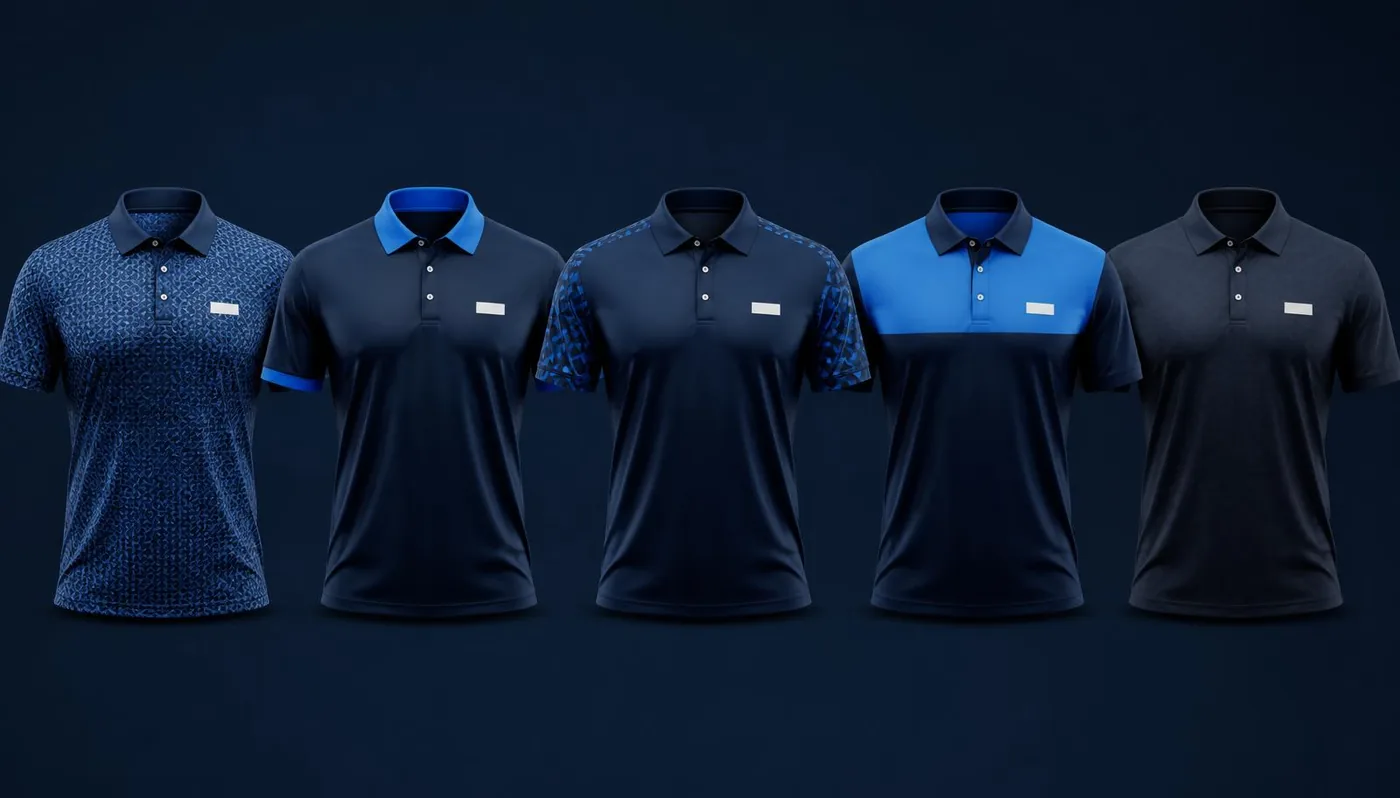
Panel By Panel
Every visible area has a purpose
Pattern + Solid
Balance detail with breathing room
Brand Palette
Primary, secondary, accent, and neutral roles
Subtle To Bold
Built for the audience and use case
What Color Blocking Means In Custom Apparel
Color blocking assigns different colors, patterns, gradients, or visual treatments to different parts of the garment. A polo might use a patterned body with solid sleeves, a secondary-color collar, narrow contrast cuffs, and a clean chest logo. Another might keep the entire garment solid except for a branded inner collar and patterned shoulder panel.
Because Butcher Golf apparel is planned before the fabric is printed and sewn, these decisions are part of the garment rather than decorations added afterward. The artwork is developed for the actual body, sleeve, collar, placket, cuff, and other construction panels.
The purpose is not to use every available area. Color blocking creates hierarchy. It controls where the eye goes first, how the brand colors are distributed, and whether the final piece feels classic, modern, sporty, executive, or event-focused.
The Main Design Areas
Body
The body carries the largest visual mass. It can be solid, patterned, divided into a color-blocked core, or treated with an ombré transition. A busy body usually benefits from quieter sleeves and collar. A simple body can support stronger accents.
Sleeves
Sleeves can match the body, introduce a secondary color, carry a separate pattern, or create a strong athletic frame. They are also useful for supporting logos, sponsor marks, or event details without crowding the chest.
Collar
The collar sits close to the face and strongly affects perceived quality. A solid collar can organize an all-over pattern. A contrast collar can pull forward a secondary brand color. A patterned inner collar can add discovery while the exterior remains understated.
Placket
The placket runs through the visual center of a men's polo. Matching it to the collar creates continuity. Matching it to the body can reduce contrast. A separate placket color can create a strong vertical detail, but it should not compete with the featured chest logo.
Cuffs
Cuffs provide a narrow place for contrast. They can repeat the collar color, introduce an accent, or finish a patterned sleeve with a clean edge. Because the area is small, a bright color can be used without dominating the garment.
Shoulders and side panels
Shoulder, yoke, and side treatments can shape the silhouette and create movement. These panels are useful for athletic or contemporary designs, but they should follow the garment's actual construction rather than being drawn as arbitrary stripes.
Trim and small details
Buttons, zipper tape, piping, interior collar details, and narrow edge treatments can reinforce the palette. Small details often create the premium feeling buyers notice without immediately identifying why.
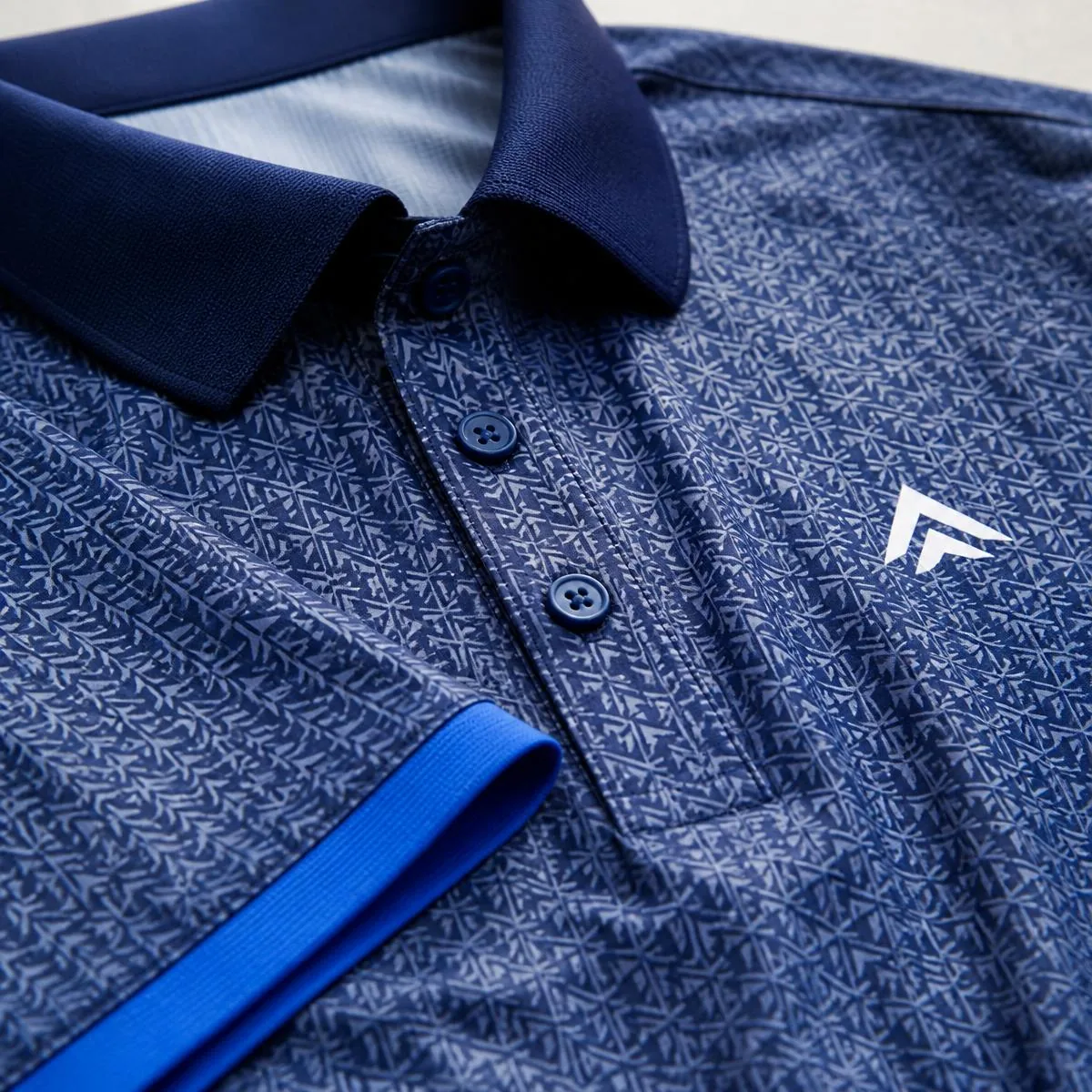
Eight Common Print And Panel Directions
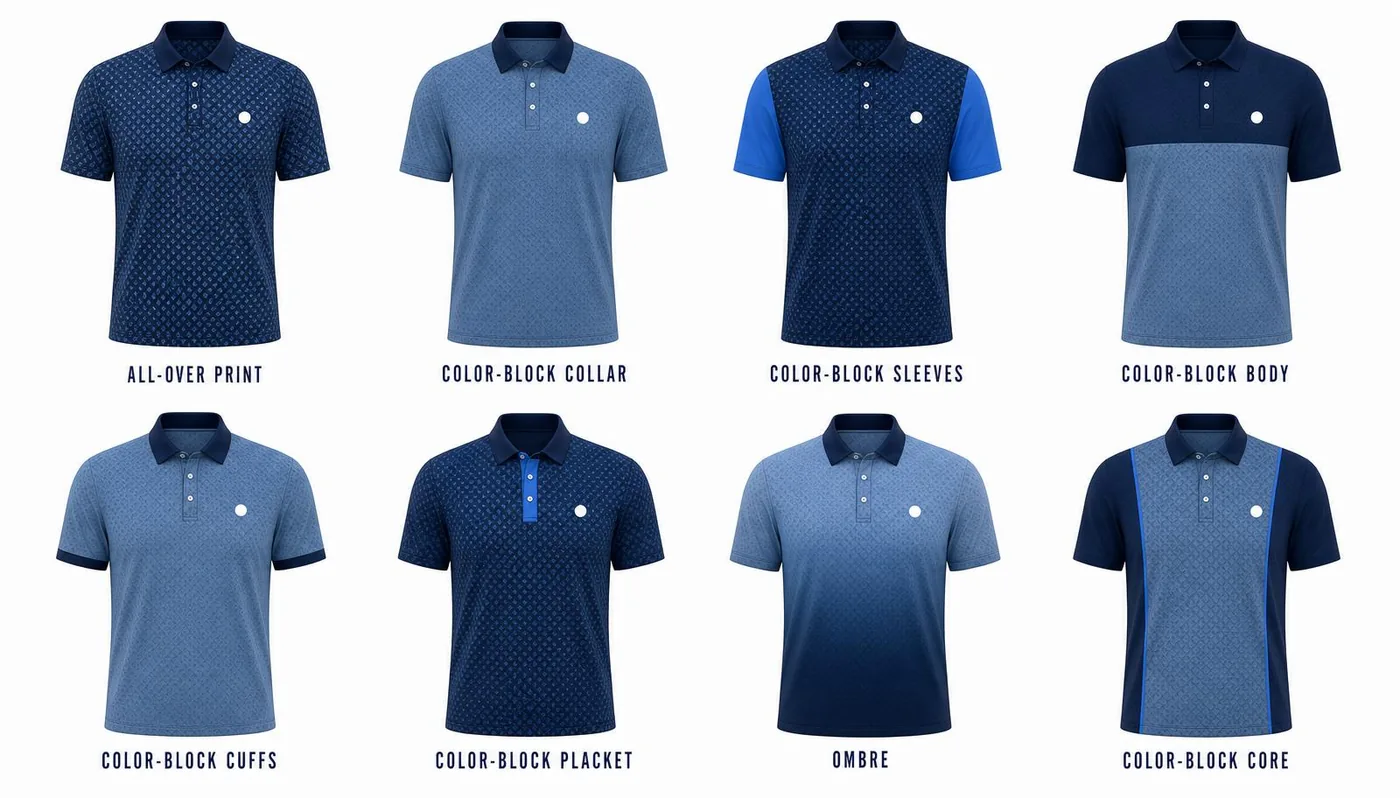
1. All-over print
The pattern or graphic direction carries across most of the garment. Solid trim may still be used to frame the design.
2. Color-blocked collar
The body and sleeves remain coordinated while the collar introduces a solid primary, secondary, or neutral color.
3. Color-blocked sleeves
The sleeves separate from the body through color or pattern. This can create a stronger athletic silhouette and a clear place for sleeve branding.
4. Color-blocked body
The body changes while sleeves and collar remain in another treatment. This can reduce the amount of pattern or create a stronger central field.
5. Color-blocked cuffs
A narrow cuff accent adds definition at the sleeve edge and can repeat a collar or logo color.
6. Color-blocked placket
The placket becomes a deliberate vertical accent. This is effective when used with restraint and coordinated with the collar or trim.
7. Ombré
Color transitions gradually across a panel, often from shoulder to hem or between two brand colors. The effect can be subtle or high-impact depending on contrast.
8. Color-blocked core
A central or primary body area is separated from surrounding sleeves, shoulders, or side regions. This can create a clean professional field while allowing supporting panels to carry pattern.
How To Balance Pattern And Solid Color
Pattern creates interest. Solid color creates structure. The strongest designs decide which one is leading.
A patterned body with patterned sleeves, patterned collar, multiple contrast colors, and several logos can become difficult to read. Removing one or two treatments often makes the remaining idea stronger.
Useful combinations include:
- Tonal patterned body with solid collar and sleeves
- Solid body with patterned sleeves and inner collar
- Patterned body with solid collar, cuffs, and placket
- Solid body with a patterned shoulder or side panel
- Low-contrast all-over pattern with one clean chest logo
- Ombré body with minimal supporting trim
The objective is a garment people understand immediately and continue discovering up close.
Our branded pattern design guide explains how motif scale and contrast affect that balance.
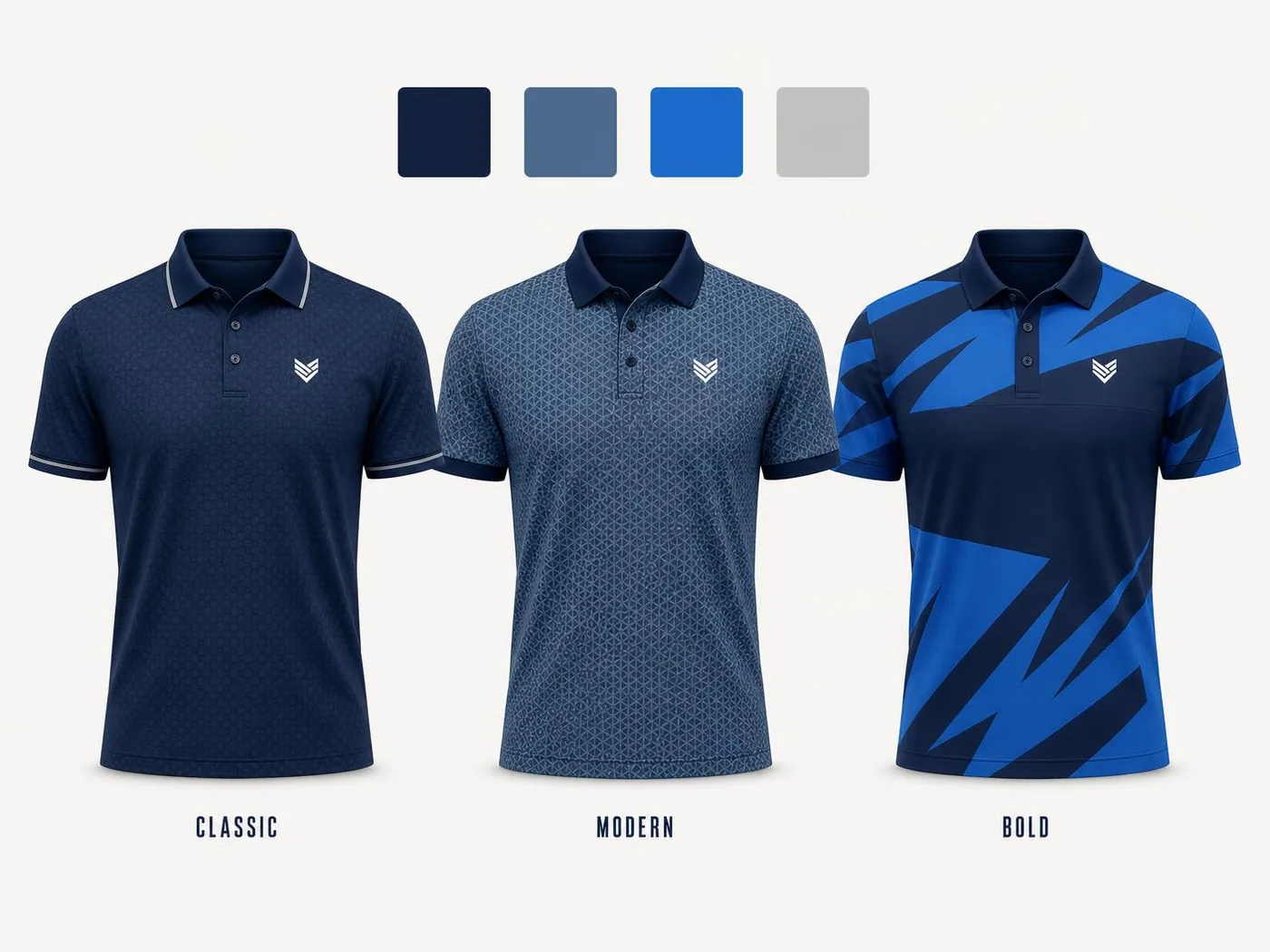
Use The Brand Palette As A Hierarchy
Most brand palettes contain more colors than one garment should use equally. Color blocking works best when each color has a role.
Primary color
The primary color usually controls the largest area or the first read of the garment.
Secondary color
The secondary color supports the primary through sleeves, collars, side panels, or pattern elements.
Accent color
The accent color creates controlled energy at cuffs, piping, buttons, zipper details, or small graphics.
Neutral color
A neutral gives the eye rest and makes stronger colors easier to wear. White, gray, navy, black, or another approved neutral may be used to separate saturated brand colors.
The exact roles should be defined before production rather than assigned panel by panel without a plan.
See how Pantone references and documented brand values support color decisions for custom apparel.
Classic, Modern, Or Bold
Classic direction
A mostly solid or tonal body, traditional collar treatment, limited contrast, and one featured chest logo. Branded details appear through a subtle pattern, sleeve mark, or inner-collar treatment.
Modern direction
A controlled pattern, distinct sleeve or shoulder treatment, and intentional use of secondary colors. The garment looks noticeably custom without becoming event-specific.
Bold direction
Higher contrast, larger motifs, stronger color separation, ombré, or a graphic body treatment. This direction works best when visibility and photographic impact are part of the objective.
The same company may need more than one tone. Everyday employee uniforms may stay classic while a tournament or brand activation uses a bolder version of the same pattern and palette. A coordinated system preserves recognition without forcing every garment to serve the same purpose.
Designing Men's And Women's Polos Together
A coordinated collection does not mean forcing identical construction onto different garments.
The Butcher Golf men's polo uses a classic three-button placket. The women's polo uses a buttonless V-neck construction. The same pattern, palette, sleeve treatment, and overall hierarchy can carry across both, but the artwork has to respect the different necklines and panel shapes.
A featured logo may need a slightly adjusted placement to sit correctly on each garment. A placket color decision on the men's polo may translate to neckline trim or a related front treatment on the women's polo. The objective is visual consistency, not mechanical duplication.
Men's and women's sizes can be mixed within the same approved design and 25-piece minimum.
Coordinating Polos And Quarter-Zips
The same brand system can extend beyond one garment. A polo and quarter-zip can share the core pattern, primary palette, featured logo, and supporting details while adapting to different construction.
The quarter-zip zipper line and mock-neck collar change the visual center. A color-blocked polo placket may become coordinated zipper trim. A patterned polo collar may become a patterned quarter-zip collar exterior or inner collar. Sleeves and shoulder panels may carry the same supporting color.
Review the custom quarter-zip design guide for layering-specific design considerations.
How We Choose The Right Direction
- 01
Review The Brand
Review the brand palette, logos, and intended audience.
- 02
Set The Tone
Decide whether the garment should feel classic, modern, or bold.
- 03
Select The Lead Element
Choose the leading element: solid color, pattern, graphic, or ombré.
- 04
Assign Color Roles
Assign primary, secondary, accent, and neutral roles.
- 05
Plan The Panels
Plan the body, sleeves, collar, placket, cuffs, and supporting panels.
- 06
Place The Logos
Add logo placements and remove unnecessary competition.
- 07
Review And Approve
Review the concept at realistic garment scale and approve the final artwork.
See the full custom apparel design process from brand submission through production approval.
Common Questions
Still deciding? Tell us about your project and we'll answer specifics for your brand.
Start Your Design- What is color blocking on a custom polo?
- Color blocking assigns different colors, patterns, or treatments to specific garment areas such as the body, sleeves, collar, cuffs, placket, shoulders, or side panels. The panels are planned before the fabric is printed and sewn.
- Can a custom polo combine solid and patterned fabric?
- Yes. A polo may use a patterned body with solid sleeves and collar, a solid body with patterned accents, or another coordinated combination. Solid areas often make branded patterns easier to wear.
- Can the collar, cuffs, and placket all be different colors?
- They can, but using every area independently may weaken the design. The best layouts assign clear roles to the primary, secondary, accent, and neutral colors and repeat details intentionally.
- Can men's and women's polos use the same design?
- Yes. The same approved pattern, palette, and design hierarchy can be adapted to the men's three-button polo and women's buttonless V-neck polo. Men's and women's sizes may be mixed within the same order.
- Can a quarter-zip coordinate with the polo design?
- Yes. The pattern, palette, logo hierarchy, sleeve treatments, and trim can be adapted to the quarter-zip's zipper, collar, and layering construction to create a coordinated apparel collection.
Related Design Studio Guides
Branded Pattern Design
How logos, icons, and graphics become wearable repeat patterns at the right scale and contrast.
Custom Sublimated Polos
Garment-wide patterns, panel treatments, and performance fabric built around your brand.
Pantone and Brand Color Matching
How Pantone references and brand color standards translate to printed performance fabric.
Custom Quarter-Zip Design
Layer-friendly custom pullovers for offices, travel, events, and client-facing teams.
Give Every Panel A Purpose
Send your logo, color standards, and the tone you want the apparel to carry. Butcher Golf will develop custom polo and quarter-zip concepts that use pattern, solids, panels, and trim as one complete brand system.
Written and reviewed by the Butcher Golf design team. Last reviewed: August 6, 2026.