
Cut-and-Sew Custom Apparel Built Around Your Brand
Cut-and-sew custom apparel begins with the brand and builds the garment around it. Instead of taking an existing polo or quarter-zip and adding a logo, Butcher Golf plans the colors, patterns, panels, trim, and logo placements before the fabric is cut or the garment is sewn.
25 Pieces
Minimum per approved design
Fully Custom
Every panel planned for your brand
Mixed Fits
Men's and women's sizes in one order
~3 Weeks
Delivery after artwork approval
What Cut-and-Sew Custom Apparel Means
Cut-and-sew describes the order in which a garment is created. The design is developed first. Artwork is mapped to the individual pieces that will become the front, back, sleeves, collar, placket, cuffs, and other garment panels. The artwork is then printed into polyester-based performance fabric through dye-sublimation. After printing, the fabric is cut into those planned shapes and sewn into the finished polo or quarter-zip.
That sequence gives the design team control over the whole garment. A logo can become a tonal repeat across the body — see branded pattern design for how those repeats are built. A secondary brand color can move to the collar or sleeve. A pattern can stop cleanly at a panel edge or transition deliberately across a seam. The result is apparel designed for one company rather than a general-market garment carrying one company's logo.
For businesses that care about how their brand appears in front of employees, clients, customers, and event attendees, that distinction matters. The finished piece looks intentional because every visible area was part of the design decision.
For a closer look at how the artwork becomes printed fabric, review our guide to the dye-sublimation process. Because production artwork has to be mapped to real garment panels, a rendered concept is a starting point rather than a print file — how AI concepts become real custom polos explains what changes along the way.
Why The Order Of Operations Changes The Result
Most decorated apparel starts with a finished blank. The shape, seams, collar, sleeve treatment, fabric color, and trim have already been decided by the blank manufacturer. Branding is added afterward through embroidery, screen printing, heat transfer, or another decoration method.
Cut-and-sew reverses that relationship. The garment does not exist until the approved design has been planned. That makes the body, sleeves, collar, placket, cuffs, shoulders, and trim available as coordinated design surfaces.
The difference is not simply that cut-and-sew apparel can be more colorful. A fully custom garment can also be quieter and more refined. A small logo mark repeated at low contrast can read as texture from across a room. A solid body with a patterned inner collar can feel nearly traditional until the wearer moves. A single contrast cuff can carry a secondary color without turning the entire garment into an advertisement.
The value is control. The design can be as understated, bold, classic, technical, or event-focused as the brand and use case require.
Fully Custom Apparel Versus A Decorated Blank
Both approaches have legitimate uses. The right choice depends on what the apparel needs to accomplish.
Decorated Stock Apparel
- Begins with a completed garment selected from available colors and fits.
- Usually concentrates branding in one or two decoration zones.
- Works well when speed, familiarity, or a simple embroidered mark is the priority.
- Offers limited control over collars, sleeves, panels, trim, and garment-wide artwork.
Fully Custom Cut-and-Sew Apparel
- Begins with a company's logo, colors, visual identity, and intended use.
- Allows patterns, gradients, color blocking, and coordinated artwork across multiple panels.
- Creates a garment that feels specific to the organization rather than selected from a catalog.
- Works especially well for uniforms, client-facing teams, events, gifts, and programs where brand presentation matters.
Butcher Golf specializes in the second approach. We design cut-and-sew custom sublimated polos and quarter-zips. We do not provide embroidery or screen printing on stock blanks. For a direct comparison of the two methods, see sublimation vs. embroidery.
See how that distinction applies to custom corporate apparel designed around a complete brand identity.
Designing The Garment Panel By Panel
A fully custom design is not one flat graphic stretched across a shirt. Each construction panel has a job, a shape, and a relationship to the panels around it.
Front and back body panels
The largest areas establish the primary visual tone. They may carry a full repeat pattern, a subtle texture, a gradient, a color-blocked core, or a mostly solid field with controlled details.
Sleeves and cuffs
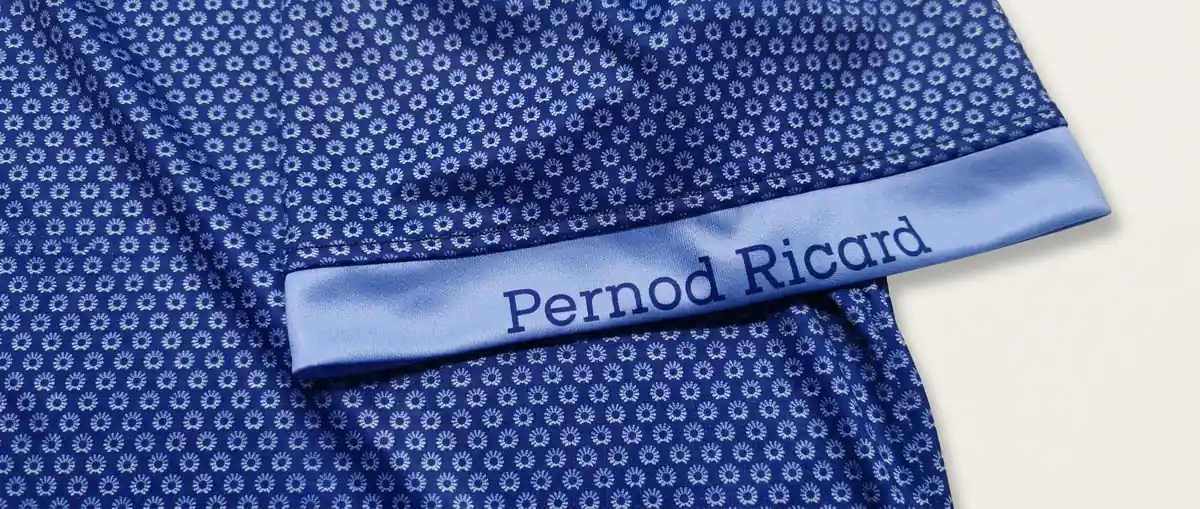
Sleeves can continue the body artwork, introduce a secondary pattern, display a sponsor or supporting mark, or stay solid to calm a busier body design. Cuffs create a narrow but useful place for a contrast color or pattern break.
Collars and plackets
These areas sit close to the face and often determine whether the finished garment feels polished. A solid collar can frame a patterned body. A patterned inner collar can create discovery without adding visual noise. A coordinated placket can connect the collar to the body or intentionally separate them.
Shoulders, seams, and trim
Seams should be treated as design boundaries rather than ignored. Artwork can align across them where practical, change direction intentionally, or stop at a color-blocked panel. Thin trim and piping details can reinforce the palette without carrying another logo.
Quarter-zip construction
The zipper and mock-neck collar create a different visual center than a polo placket. Artwork must be planned around the zipper line, collar exterior, inner collar, shoulder areas, and layering fit. Review our custom quarter-zip design guide for product-specific considerations.
Performance Apparel Designed To Be Worn
Customization only creates value when the finished garment is comfortable and appropriate for the people receiving it. Butcher Golf polos and quarter-zips use lightweight performance fabric selected for movement, moisture management, four-way stretch, wrinkle resistance, and a clean professional appearance.
The design process considers wearability as carefully as visibility. Pattern scale should make sense at conversational distance. Logo placements should remain legible without competing with one another. Color blocking should support the wearer's silhouette rather than divide it awkwardly. Men's and women's garments should look like one collection while preserving the correct construction and fit of each product.
A team should feel coordinated, not costumed. That is why many successful corporate designs use one strong idea and a disciplined hierarchy: a primary palette, a clear pattern or panel treatment, one featured logo placement, and one or two supporting details.
When Cut-and-Sew Custom Apparel Makes Sense
Cut-and-sew is a strong fit when the garment needs to do more than identify the company.
- Employee uniform programs that should feel polished and distinctive
- Sales and account teams meeting customers in person
- Corporate golf tournaments and sponsor groups
- Conferences, trade shows, and event staff
- Company retreats, leadership meetings, and team-building events
- Client appreciation and executive gifts
- Brand activations and experiential marketing programs
- Member organizations, associations, and volunteer teams
It is particularly valuable when people will be photographed, seen by customers, or expected to wear the apparel repeatedly after the event. A garment built around the brand has a better chance of feeling like real apparel rather than a temporary giveaway.
How A Butcher Golf Project Moves Forward
- 01
Share Your Brand
Send your logo, brand colors, intended use, quantity, size needs, and any examples that clarify the direction.
- 02
Review Custom Concepts
The design team develops apparel directions around your identity rather than asking you to choose from preset decorations.
- 03
Refine And Approve
You provide clear, consolidated feedback and approve the final artwork before production.
- 04
Produce And Deliver
The fabric is printed, cut, sewn, finished, and delivered in approximately three weeks after artwork approval.
The complete custom apparel design process explains what to send and how to keep review and approval moving efficiently.
What To Prepare Before You Start
- A vector logo when available, or the highest-resolution logo files you have
- Official brand colors, preferably Pantone references or documented digital values
- Brand guidelines, alternate marks, icons, or approved graphic elements
- The intended audience and where the apparel will be worn
- Whether the design should feel understated, classic, bold, sporty, or executive
- Approximate quantity and men's and women's size needs
- The date the finished apparel needs to be in hand
- Examples of apparel directions you like or want to avoid
You do not need to arrive with a finished shirt design. The purpose of the process is to translate the information you already have into a garment that fits your brand.
Common Questions
Still deciding? Tell us about your project and we'll answer specifics for your brand.
Start Your Design- What is cut-and-sew custom apparel?
- It is apparel designed before the garment is assembled. Artwork is mapped to the garment panels, printed into performance fabric, cut into the required shapes, and sewn into the finished polo or quarter-zip. This allows the full garment to be designed around a brand.
- Is cut-and-sew the same as adding a logo to a blank polo?
- No. A decorated blank is already manufactured before the logo is added. In a cut-and-sew process, patterns, colors, panels, trim, and logo placements are approved before the fabric is printed and the garment is assembled.
- Can a cut-and-sew design still look subtle?
- Yes. Fully custom does not have to mean loud. Tonal patterns, small motif scales, solid body panels, controlled accents, and limited logo placements can create an understated design suitable for executives and client-facing teams.
- What products does Butcher Golf produce?
- Butcher Golf focuses on fully custom dye-sublimated performance polos and lightweight quarter-zips for businesses, organizations, teams, and events.
- What is the minimum order and production timeline?
- The minimum is 25 pieces per approved design, with men's and women's sizes mixable within that design. Most orders are delivered in approximately three weeks after final artwork approval, subject to order details, destination, holidays, and production scheduling.
Related Design Studio Guides
Custom Corporate Apparel Design
How brand identity becomes wearable design for uniforms, sales teams, events, and client gifts.
Custom Sublimated Polos
Garment-wide patterns, panel treatments, and performance fabric built around your brand.
Dye-Sublimation Process
A step-by-step look at printing, cutting, and sewing fully custom cut-and-sew apparel.
Custom Apparel Design Process
What to send, how concepts are developed, and what happens between approval and delivery.
Sublimation vs. Embroidery
How the two branding methods differ and which one fits your corporate apparel goal.
Branded Pattern Design
How logos, icons, and graphics become wearable repeat patterns at the right scale and contrast.
Build The Garment Around Your Brand
Send your logo, colors, and project details. Butcher Golf will turn them into fully custom polo or quarter-zip concepts designed for the way your team, customers, or event will actually use them.
Written and reviewed by the Butcher Golf design team. Last reviewed: August 6, 2026.