
How the Dye-Sublimation Process Works
From artwork to printed fabric to a finished garment — the seven stages behind fully custom cut-and-sew corporate apparel.
7 Stages
Artwork to delivery
Printed First
Fabric, then cut and sewn
Polyester Base
Performance knit fabrics
~3 Weeks
After artwork approval
The Short Answer
Dye-sublimation moves dye into polyester-based fabric using heat and pressure. In a cut-and-sew custom apparel workflow, artwork is designed to the shape of the garment's panels, printed onto transfer material, transferred into flat performance fabric, and only then cut and sewn into a finished polo or quarter-zip.
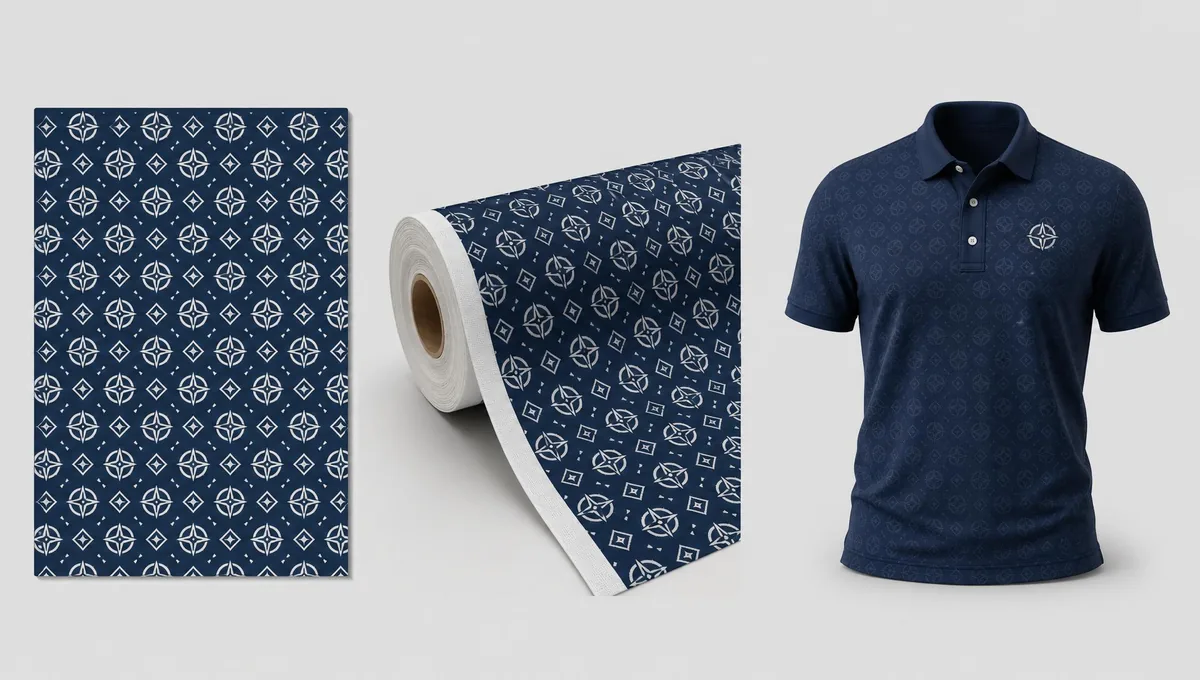
Because the color becomes part of the fabric, there is no applied surface layer and no decoration boundary. Because the fabric is printed before assembly, the entire garment is available as design space.
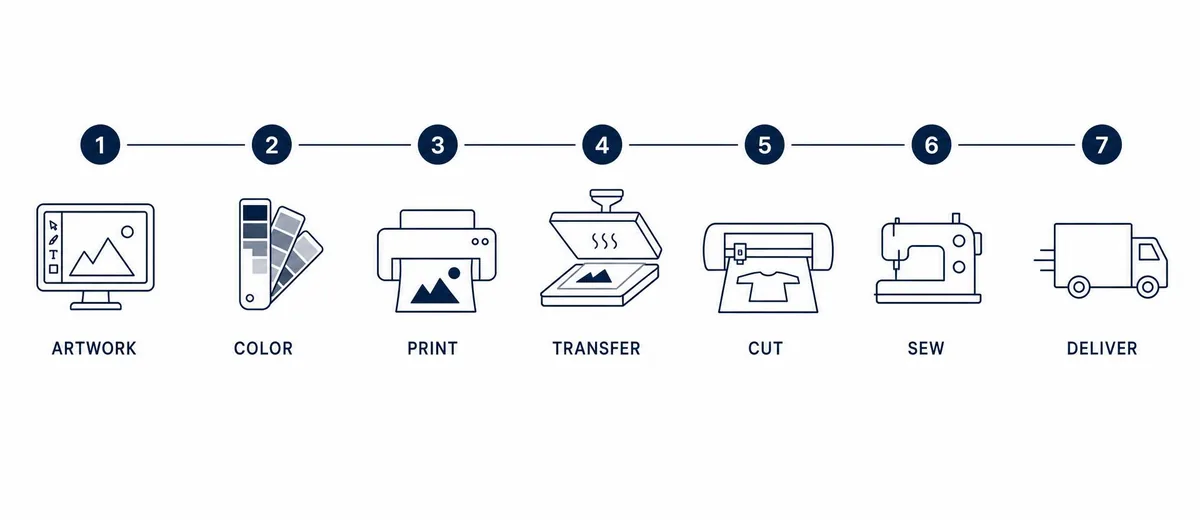
The Process, Step By Step
1. Artwork and garment-panel design
Everything begins with artwork built for a specific garment, not a flat rectangle. The design is laid out across the panels that will become the front, back, sleeves, collar, placket, and cuffs, with allowance for how those panels meet at the seams. A pattern that looks correct on a screen can break at a shoulder seam if it was never planned as panels — which is why this stage does more for the finished result than any other.
2. Color and pattern planning
Next, the palette is set and the pattern is scaled. This is also where expectations around color get set honestly. Screens are backlit and calibrated differently from one another, Pantone references are useful guides rather than exact fabric equivalents, and fabric composition, dye behavior, and production conditions all influence final appearance. We work carefully to stay faithful to your brand colors, and we would rather tell you that up front than promise universal, perfect color matching that no printing method can guarantee.
3. Printing artwork onto transfer material
The approved artwork is printed with sublimation inks onto transfer material. At this stage the printed sheet looks muted compared with the final garment — the colors have not yet gone through the heat stage that develops them.
4. Heat and pressure move the dye into the fabric
The transfer is paired with polyester-based performance fabric and run through heat and pressure. The dye converts to a gas, enters the fibers, and sets as the material cools. The design is now inside the fabric rather than on top of it, which is why there is no raised surface and no separate coated layer to crack or peel away as a distinct film.
5. Cutting printed fabric into garment panels
The printed fabric is cut into the specific panels of the polo or quarter-zip. Cutting follows the artwork layout from step one so patterns land where they were planned — this is where careful panel design pays off or fails to.
6. Sewing and finishing
Panels are sewn into a finished garment: shoulders, side seams, sleeves, collar, placket or zipper, and hems. Because each panel was printed individually, seams can be treated as design lines rather than obstacles — a pattern can continue across a shoulder or intentionally change at a color-blocked panel edge.
7. Review and delivery
Finished garments are reviewed against the approved artwork before shipping. Standard delivery to one U.S. address is included in published pricing. Most orders reach you in approximately three weeks after final artwork approval, with variation possible based on order size, complexity, destination, holidays, and factory scheduling.
Benefits And Limitations
What it does well. Garment-wide artwork, unlimited color counts within a design, gradients and ombre effects, precise panel treatments, and a smooth hand with no raised decoration. Because dye is bonded into the fibers, printed areas wear much like the fabric itself rather than as a separate applied layer.
What it doesn't do. Sublimation depends on polyester-based fabrics, so it is not a fit for cotton garments. It cannot produce the raised, tactile look some buyers specifically want from stitching. And like any printed textile, appearance over time depends on care, exposure, and use — we don't claim colors can never change.
What it requires. A design decision up front. Because printing happens before assembly, artwork must be finalized and approved before production begins.
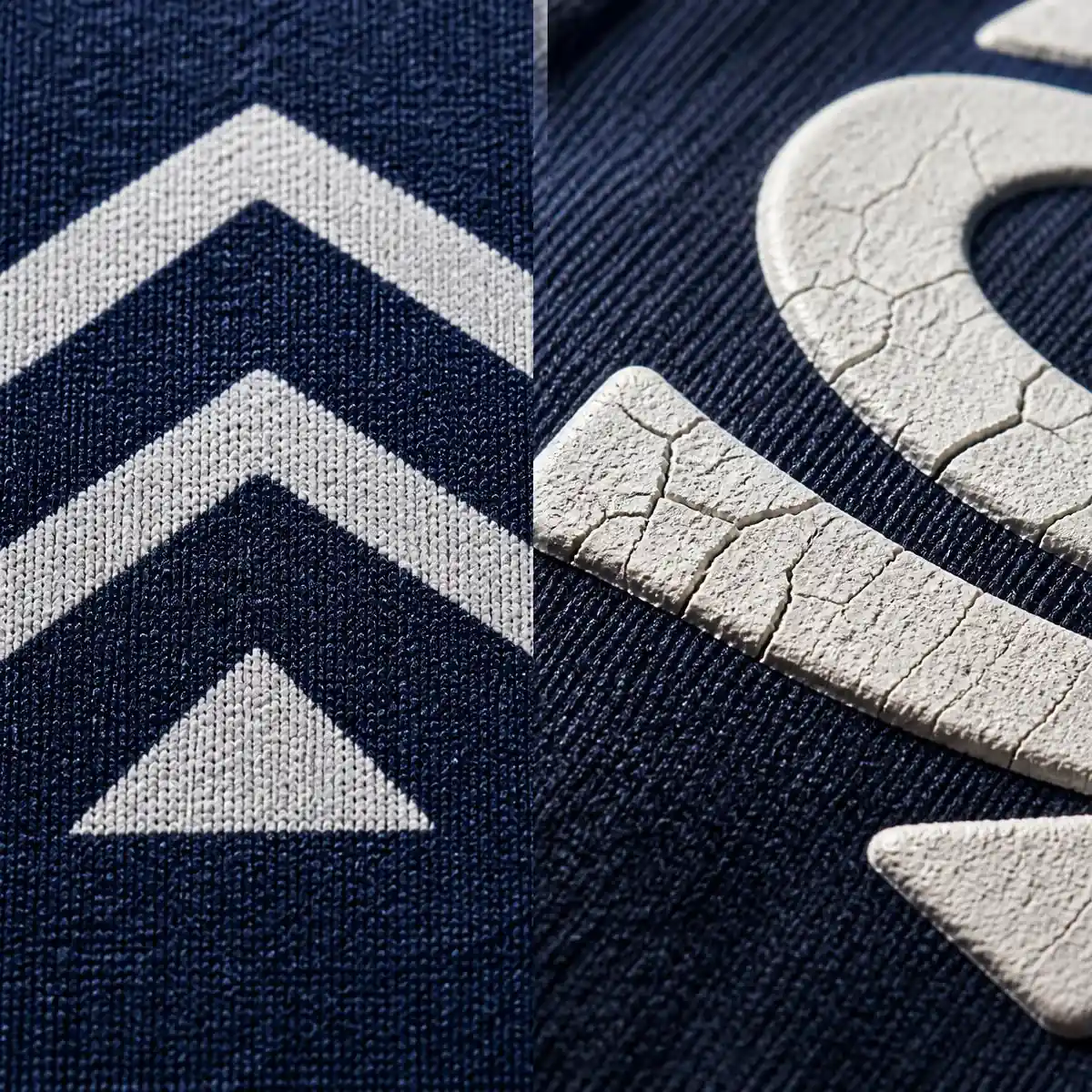
Sublimation Compared With Embroidery And Screen Printing
Embroidery and screen printing are legitimate, well-established methods, and plenty of projects are best served by them. They simply solve a different problem.
- Embroidery stitches thread into an existing garment. It produces a durable, tactile mark and is well suited to compact logos on stock blanks. Its scale is limited by stitch count and machine reach.
- Screen printing applies ink to the surface of an assembled garment. It handles bold graphics efficiently at volume, with cost typically influenced by the number of colors.
- Cut-and-sew dye-sublimation prints the fabric before the garment exists. It is the method to choose when the garment itself — not just a logo area — should be designed around a brand.
Butcher Golf specializes exclusively in cut-and-sew dye-sublimated apparel. We do not provide embroidery or screen printing. If you want to see what that specialization produces, review custom dye-sublimated polos, or compare the two methods in our guide to sublimation vs. embroidery.
Why Cut-And-Sew Planning Matters
The difference between a good sublimated garment and a sloppy one usually shows up at the joints. Seams, collars, sleeves, plackets, and zippers are where a pattern either resolves or falls apart.
- Seams. A repeating pattern that ignores seam allowance can jump noticeably across a side seam. Planned panels keep the motif continuous or break it deliberately.
- Collars. A collar can be solid, patterned, or color blocked, but the decision has to be made before printing so the collar panel is produced correctly.
- Sleeves and cuffs. Sleeve pattern direction and cuff treatment affect how the garment reads with arms in motion, not just laid flat.
- Plackets and zippers. A center placket or quarter-zip line cuts through the chest — the busiest area of most designs. Pattern and logo placement have to work with it.
That planning is design work, and it's included. See the custom apparel design process for how it fits into a project timeline.
What This Means For Your Project
- 01
Approve Before Production
Printing precedes assembly, so artwork approval is the gate. Everything after it is manufacturing.
- 02
Design The Whole Garment
Treat sleeves, collars, and plackets as design surfaces, not leftovers.
- 03
Plan Around Your Date
Work backward roughly three weeks from when you need garments in hand, plus review time.
See an Example of the Dye-Sublimation Process
Third-party process example: This video is provided for general educational purposes and does not depict Butcher Golf, our production partners, or the facility used to manufacture Butcher Golf apparel. Equipment, workflow, materials, and production methods may vary by facility and product.
Common Questions
Still deciding? Tell us about your project and we'll answer specifics for your brand.
Start Your Design- What fabrics work best for dye sublimation?
- Polyester-based performance fabrics. Sublimation dye bonds with polyester fibers, which is why performance knits — including the poly-spandex blends used for our polos and quarter-zips — hold printed color well while staying lightweight and stretchy.
- Does sublimation add a raised layer to the fabric?
- No. The dye moves into the fibers rather than sitting on the surface as a separate applied layer, so a sublimated area feels like the fabric around it instead of like a patch or a printed panel.
- Can artwork cover the entire garment?
- Yes. Because the fabric is printed before the garment is cut and sewn, artwork can extend across body panels, sleeves, collars, plackets, and cuffs rather than being limited to a decoration area.
- Why are garments printed before they are sewn?
- Printing flat fabric lets the design be planned panel by panel, so patterns can be positioned intentionally at seams, collars, and plackets. Printing an already-assembled garment would restrict where artwork could go and how it lines up.
- How long does Butcher Golf production take after artwork approval?
- Most orders are produced and delivered in approximately three weeks after final artwork approval. Timing can vary with order size, design complexity, destination, holidays, factory schedules, and requested delivery service.
Related Design Studio Guides
Design Studio
The hub for every Butcher Golf guide on designing fully custom corporate polos and quarter-zips.
Custom Sublimated Polos
Garment-wide patterns, panel treatments, and performance fabric built around your brand.
Custom Apparel Design Process
What to send, how concepts are developed, and what happens between approval and delivery.
Cut-and-Sew Custom Apparel
How a garment is designed panel by panel before the fabric is printed, cut, and sewn.
Sublimation vs. Embroidery
How the two branding methods differ and which one fits your corporate apparel goal.
Put The Process To Work
Send your logo and brand colors and we'll design a garment around them — not a blank with a logo on it.
Written and reviewed by the Butcher Golf design team. Last reviewed: September 2, 2026.