This is an educational buyer's guide: it explains how sublimation printing works, what the fabric is, how cut-and-sew construction differs from decorating a blank, what to check at the proofing stage and how ordering typically unfolds. If you already know what you need and want to start a project, our custom sublimated polos service page covers design options, minimums and production timing.
Custom sublimated polos let sports teams, businesses, and schools create shirts with full-color artwork that covers every panel of fabric. Unlike screen printing, sublimation bonds dye directly into polyester fibers, so there is no raised texture and the artwork can wrap across seams, collars, and sleeves. Not all sublimated polos are made the same way, though—Butcher Golf specializes in fully custom cut-and-sew sublimation, an approach that goes well beyond adding a logo to a stock shirt.
What Makes Custom Sublimated Polos Different?
Sublimation printing uses heat and pressure to transfer dye into polyester-based fabrics. The dye becomes part of the fibers rather than sitting on top of them. Because the design is embedded in the material, custom sublimated polos can feature edge-to-edge graphics with no limits on colors or placement. The fabric remains breathable and the print has no raised texture.
Screen printing applies ink onto the surface of a garment. Over time that ink can crack, especially with repeated washing and heavy wear. Sublimated artwork is highly resistant to cracking and peeling because the dye is inside the fibers, not on top of them. Properly produced sublimated garments generally retain their color well through repeated washing and normal wear, though like any garment, longevity depends on fabric quality, washing conditions, sun exposure, and how the shirt is cared for.
Sublimation works with polyester-based fabrics because the dye bonds with polyester fibers. Providers use different fabric constructions and blends, so buyers should confirm the exact composition and request a sample when fabric feel matters.
How Custom Sublimated Polos Are Made
The process starts with a digital design. Artwork is printed onto transfer paper using sublimation inks. The paper is positioned against the fabric, and heat and pressure are applied. The dye converts to a gas and bonds with the polyester fibers. Once the fabric cools, the print is permanent.
Because the dye saturates the material, the design may show through on both sides of lightweight fabrics — the front side will appear sharper, but some visibility on the back is normal. The method supports detailed, full-color artwork without requiring a separate screen for each color.
What happens before the heat press matters just as much. The level of customization available during the design and manufacturing stages separates a basic sublimated polo from a truly original garment.
Three Levels of Custom Polo Design
Not every custom polo is created equally. Understanding the differences helps buyers choose the right option for their project and budget.
- Stock Garment with Logo — A pre-made polo shirt with a logo added through screen printing, embroidery, or a small sublimated patch. Colors, fit, and construction are predetermined. This approach offers limited creative control.
- Template-Based Sublimated Polo — The provider offers pre-designed templates with set panel layouts and design zones. You can change colors, add a logo, and include names or numbers within the template's structure. This gives more visual impact than a stock shirt but still operates within boundaries someone else defined.
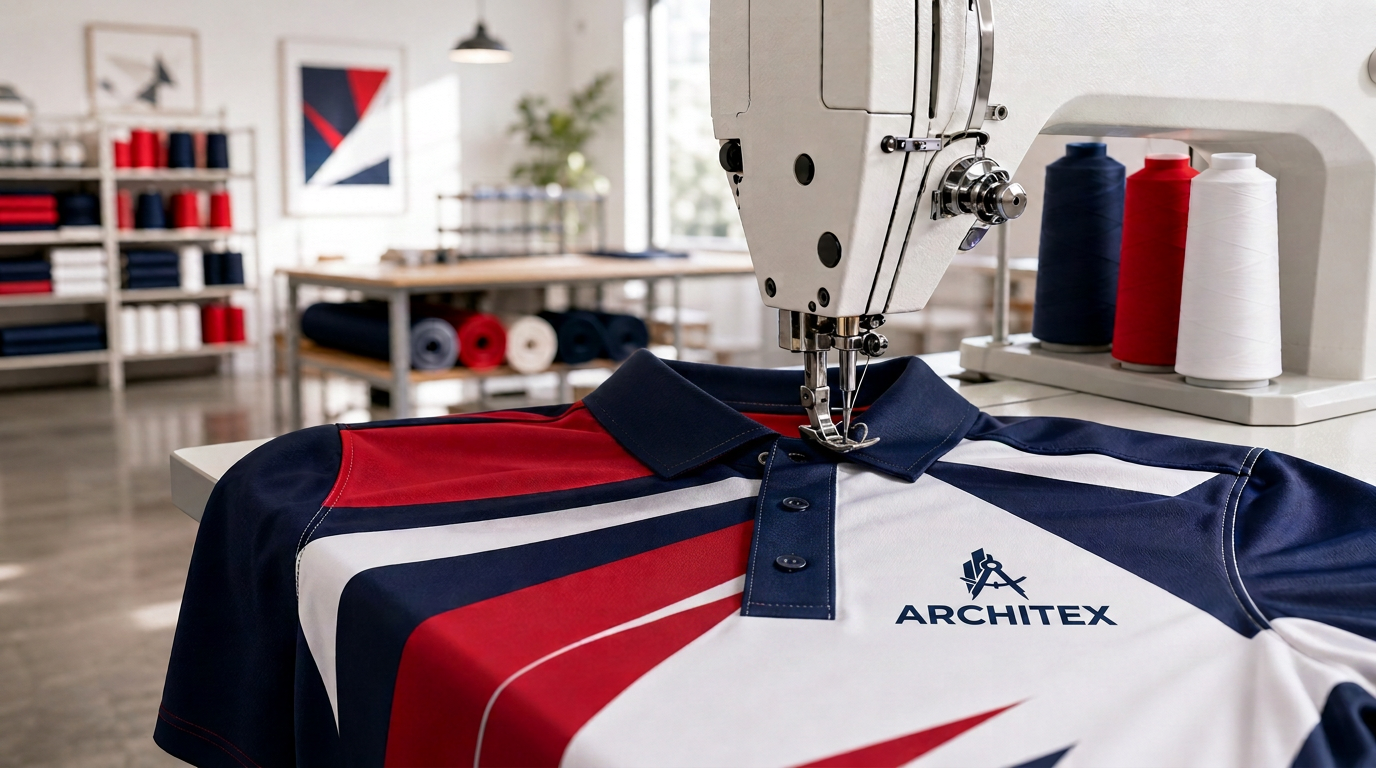
- Fully Custom Cut-and-Sew Sublimated Polo — The entire garment is designed from scratch. Every panel of fabric can carry original artwork, and the shirt is cut and sewn after the fabric is printed. Colors, patterns, typography, and graphics can extend across the collar, sleeves, front, back, and side panels without interruption. This is the approach Butcher Golf uses.
How Butcher Golf Creates Fully Custom Apparel
Butcher Golf builds each polo around the client's brand, event, or organization. Rather than placing a logo onto an existing shirt, the design team develops original artwork that incorporates your colors, logos, patterns, and themes across the full garment. The result is a polo that looks like it belongs to your organization — not a stock shirt with your name added to it.
The process begins with a conversation. You share your logo, brand colors, and ideas for the design. Butcher Golf creates original concepts that use the full surface of the shirt. Artwork can extend across panels, sleeves, and collars without seams interrupting the design. You review proofs and request revisions until the design is right. Once approved, the polos move into cut-and-sew production using dye-sublimation printing.
Clients share their logo, brand colors, and creative direction, and Butcher Golf develops an original layout — not a template with a logo dropped in. Full production begins after final artwork and Production Proof approval and payment of the remaining balance, and standard production is generally up to approximately three weeks after that approval. The minimum order is 25 pieces per approved design, with compatible men’s and women’s sizes mixable within that design.
This fully custom approach is a strong fit for businesses building a corporate uniform program, golf events and tournaments, promotional activations, trade show teams, and any organization that wants apparel that stands apart from generic alternatives.
Who Uses Custom Sublimated Polos?
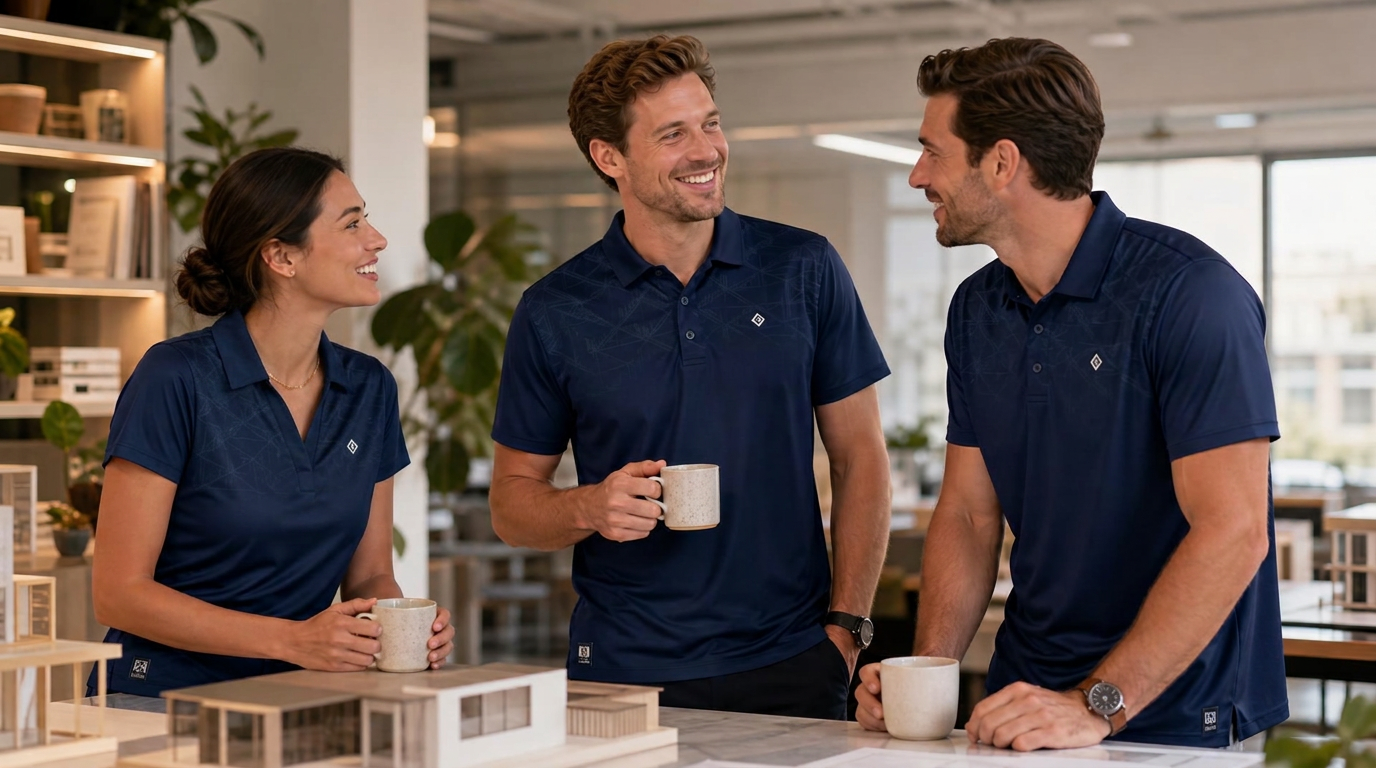
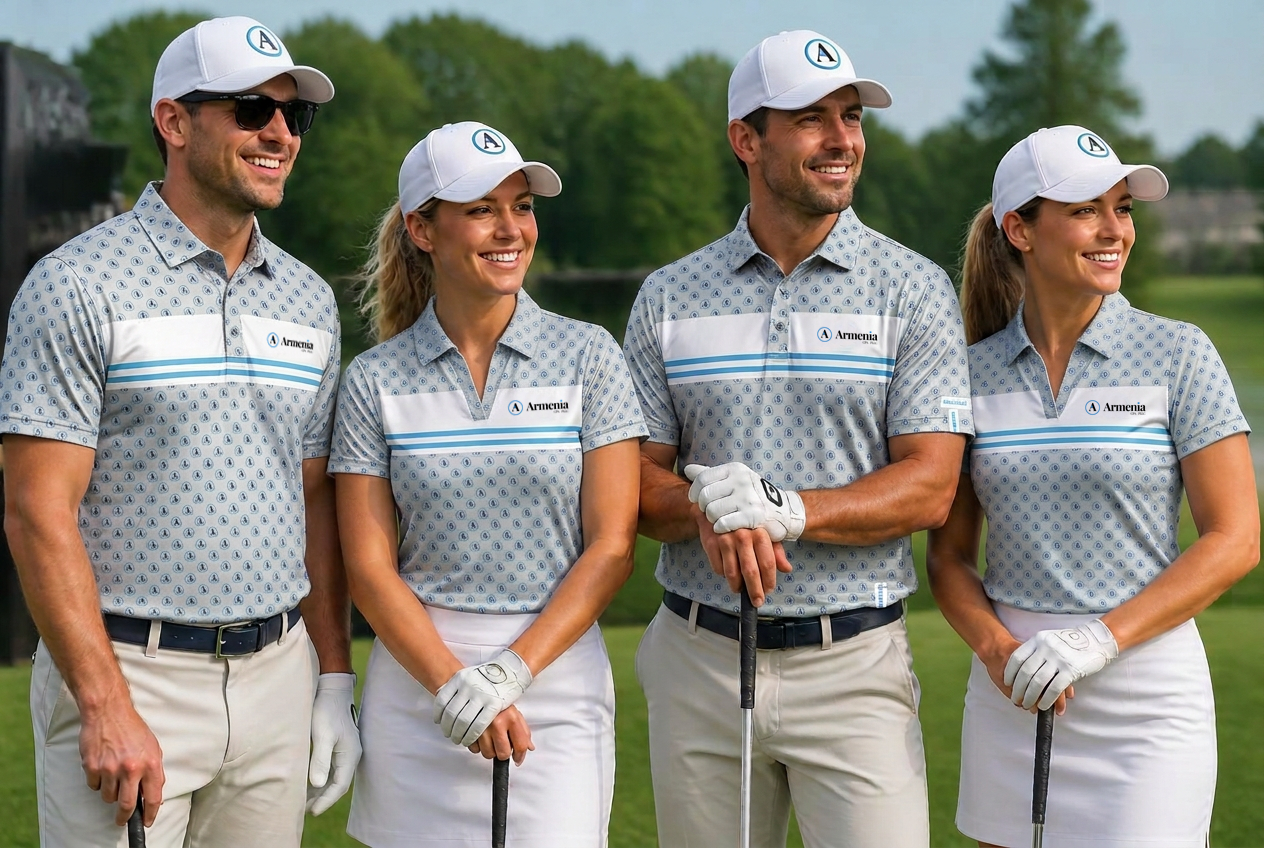
Sports teams use sublimated polos for golf outings, coaching staff, and travel uniforms where a sharp, coordinated look matters. Businesses across trades like HVAC, plumbing, electrical, and construction choose them for company uniforms that need to hold up through demanding workdays while looking professional. Schools order them for faculty, staff, booster clubs, and spirit wear. Corporate event planners use them for conferences, golf tournaments, and client hospitality.
The common thread is an organization that wants more than a basic logo shirt. Custom performance polos let teams and businesses carry their identity across the entire garment, not just a small area on the chest.
What to Compare When Choosing a Provider
Multiple companies offer sublimated polos, and their approaches differ considerably. These are the factors that matter most when evaluating your options.
- Minimum Order Quantities — Minimums range widely. Some template-based providers accept orders as small as six or twelve shirts. Fully custom cut-and-sew programs often require larger quantities because of the design and production setup involved. Always confirm the minimum before investing time in a design conversation.
- Design Approach — Some providers offer a library of pre-made templates you can personalize with your logo and colors. Others provide a design tool for building shirts online. Fully custom providers, like Butcher Golf, create original designs developed around your organization. The amount of creative input you want should guide which type of provider fits your project.
- Fabric and Fit — Sublimation requires a polyester-based fabric, and specifics vary by provider. Ask each provider to confirm composition, fit options, and available sizing, and request a sample if hand feel is important to your decision.
- Pricing — Per-unit pricing typically decreases as quantity increases. Some providers publish tiered pricing tables. Others require a quote based on your specific design and order size. Ask about setup fees, design fees, and whether revisions are included.
- Production and Delivery — Custom orders take time. Design, proofing, production, and shipping can span several weeks. Providers that handle design in-house and manufacture their own garments may have different timelines than those acting as intermediaries. If you have a firm deadline for an event or season, confirm the delivery date in writing.
- Proofing and Samples — A digital proof shows how the design will look before production starts. Review it carefully. Some providers offer physical samples for an additional cost, which can be valuable for large orders. Custom cut-and-sew orders are typically not returnable, so the proofing stage is your opportunity to catch any issues.
The Ordering Process
A typical ordering workflow may include the following steps. You choose a base approach — template, online builder, or fully custom design. You supply your logo, colors, and design direction. The provider creates a digital proof. You review it, request any changes, and approve the final version. Production begins after approval and payment.
With a fully custom provider like Butcher Golf, the design stage is more involved because the artwork is original. The tradeoff is a garment that is genuinely yours, not a variation on a template other organizations are also using.
Frequently Asked Questions
What makes sublimation better than screen printing for polos?
Sublimation embeds dye into polyester fibers, so the print does not sit on the surface as a raised ink layer. This helps avoid surface cracking and peeling and supports detailed, full-color coverage without requiring a separate screen for each color.
What is the difference between a template-based polo and a fully custom polo?
A template-based polo starts with a pre-designed layout — you can change colors, add a logo, and include text, but the design zones are fixed. A fully custom cut-and-sew polo is designed from scratch. Every panel can carry original artwork, and the shirt is manufactured after the fabric is printed. Fully custom polos offer complete creative control but typically require larger minimum orders.
What fabric works best for sublimated polos?
Polyester content matters because sublimation dye bonds with polyester fibers. Fabric construction and blends vary, so buyers should confirm the exact composition and request a sample when fabric feel matters. Butcher Golf polos are fully custom cut-and-sew garments with the artwork integrated into the fabric before assembly.
How long does delivery take?
Full production begins after final artwork and Production Proof approval and payment of the remaining balance. Standard production is generally up to approximately three weeks after final artwork and Production Proof approval, and timing may vary based on project requirements and production scheduling. Confirm the schedule directly if you have a specific event date.
Can I order a small quantity of fully custom polos?
Butcher Golf requires a minimum order of 25 pieces per design. Fully custom cut-and-sew programs generally require higher minimums than template-based providers because of the design and production work involved.
Will the design fade?
Because sublimated dye is integrated into polyester fibers, it does not form a surface layer that can peel. Color retention depends on fabric quality, production process, washing, sun exposure, and garment care.
Getting Started with Custom Sublimated Polos
Custom sublimated polos give organizations a way to create apparel that looks cohesive, professional, and entirely their own. The right provider depends on how much creative control you want, how many shirts you need, and how you want the ordering process to work.
The same fully custom approach applies to custom golf polo design for corporate outings, tournaments and client events.
If you are looking for polos built around your brand rather than a template designed for everyone else, Butcher Golf creates fully custom sublimated performance polos and fully custom quarter-zips with original artwork developed around your company, event, or organization. Share your logo, colors, and ideas — the design team will handle the rest.